


- REORDERS
- People
- POLISMOD
- Other projects
- Publications
- Events
REORDERS
About us
The REORDERS Research Lab – Religions and Socio-Political Orders – examines how religions interact with politics, society, and forms of political order in the contemporary world. REORDERS brings together political sociology, the study of religion, political science, history, and political and social theory.
Our research focuses on:
– The changing place of religion in political institutions, collective identities, social movements, migration, and public life
– The contribution of religious actors and communities to democracy, pluralism, civic participation, and social cooperation
– The role of religions in processes of political polarization and contemporary culture wars
– Democratic and illiberal orientations within religious communities, and their impact on institutions, rights, and public discourse
– The transnational circulation of ideas, networks, normative models that influence Europe’s democratic order
The lab promotes empirical and theoretical research through competitive national and European projects, academic publications, seminars, and international conferences. Alongside academic research, REORDERS develops public scholarship and structured dialogue with institutions, religious communities, the media, and civil society.
People
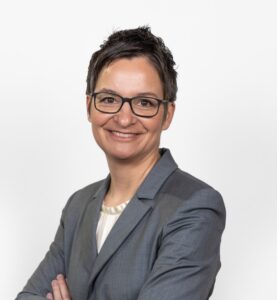
Prof. Dr. Kristina Stoeckl (Director)
Kristina Stoeckl is Director of the REORDERS Research Lab and Principal Investigator of POLISMOD. She is Full Professor of Sociology at Luiss University in Rome. Her current research on religious actors, democracy and political conflict develops out of her ERC- and FWF-funded research on conservative and religious norm mobilization, human rights and culture wars, and Orthodox Christianity. It extends this work to questions of religious moderation, democratic engagement, and resistance to autocratization. She is the author, with Dmitry Uzlaner, of The Moralist International: Russia in the Global Culture Wars (Fordham University Press, 2022) and, with Phillip Ayoub, of The Global Fight Against LGBTI Rights (NYU Press, 2024). https://www.kristinastoeckl.eu/publications/
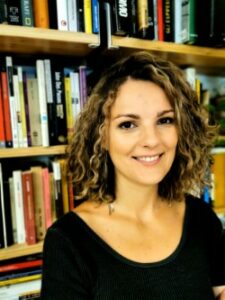
Dr. Asia Leofreddi (Postdoctoral Researcher)
Asia Leofreddi is a postdoctoral researcher and adjunct professor of Sociology (BA) in the Department of Political Science at Luiss University. Previously, she was a research fellow at the University of Bologna. She received her PhD in Sociology from the Human Rights Centre of the University of Padova in 2023. Her primary research interests include religion and politics, youth, and social movements.
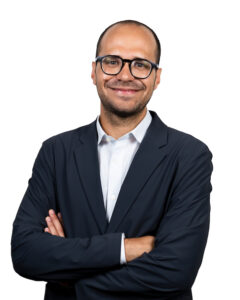
Dr. Mirko Crulli (Postdoctoral Researcher)
Mirko Crulli is a postdoctoral researcher and adjunct professor of Political Science (BA) in the Department of Political Science at Luiss University. He was previously a postdoctoral researcher at the Université libre de Bruxelles (ULB). He holds a PhD in Political Science from the University of Pisa. His primary research interests include cleavage politics, voting behaviour and public opinion, populism and radical right politics, and political geography. His work on these topics has been published in international journals, such as the Journal of European Public Policy, West European Politics, and Government & Opposition. His first book, Cultural Conflict, Political Attitudes, and Voting in European Metropolises was published by Palgrave Macmillan in 2026.
Dr. Maria Stoicescu (Postdoctoral Researcher)
Maria Stoicescu is a postdoctoral researcher in the Department of Political Science at Luiss University. Previously, she was a postdoctoral researcher in the Department of Political and Social Sciences at the University of Pavia. She received her PhD in Sociology from the University of Bucharest, Romania, in 2023. Her research focuses on the moral, emotional, and temporal dimensions of social life in contemporary societies. Her work has been published in peer-reviewed journals, including Social Psychology Quarterly, Journal of Family Research, and Sociological Research Online.

Maximilian Kunte
Maximilian Kunte is a PhD candidate in the Politics Department at Luiss University, working in the field of political sociology of religion. His research is centered on Eastern Slavic Orthodox communities in Germany, examining the impact of ecclesiastical divisions in Orthodox religious life.

Alessandro Chiodi Cianfarani (Research Assistant)
Alessandro is a research assistant on the POLISMOD. His academic background lies in political science, with a specialisation in Conflict Studies.
Affiliated Researchers
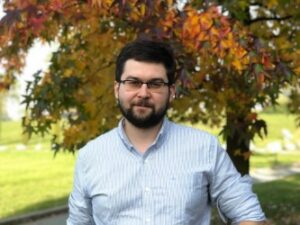
Dmitry Uzlaner
Dmitry Uzlaner (PhD in Philosophy and the Study of Religion, M.V. Lomonosov Moscow State University) is senior researcher in the Department of Political and Social Sciences, Freie Universität Berlin, Germany. He is the author of, most recently, “The Decline of Religion or Its Social Significance? An Unresolved Issue in the Secularization Debate,” Religion 1, no. 31 (2025), and, with Kristina Stoeckl, The Moralist International. Russia in the Global Culture Wars (Fordham University Press, 2022). His articles have also appeared in the Journal of Contemporary Religion, Journal of Classical Sociology, Journal of Church and State, and Method and Theory in the Study of Religion. His primary scholarly interests include sociology of religion, social theory, and religion in Russia.
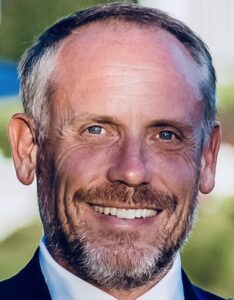
Andrew Bunnell
Honorary Lecturer, University College London
Associate Scholar, Arthur Jeffrey Centre, Melbourne School of Theology
Andrew brings academic research and practitioner experience to the study of international relations and religion. His present focus is to better understand how transnational movements of people, resources, and ideas shape global and regional politics, specifically in the European context.
POLISMOD
POLISMOD – A Political Sociology of Religious Moderation in 21st-Century Europe – is the central research project of the REORDERS Lab at Luiss University. Led by Professor Kristina Stoeckl and funded through an Italian FIS Advanced Grant, it studies religious actors who combine commitment to their religious traditions with support for democracy and pluralism.
POLISMOD studies these democratic religious actors. It asks how they combine religious commitments with support for political pluralism, equal dignity, and democratic institutions; how they respond to polarization and culture-war conflicts; and under what conditions their voices gain—or lose—influence within religious communities and the wider public sphere.
The term “religious moderates” does not simply refer to people who are less religious or politically centrist. POLISMOD uses it to investigate actors who are rooted in religious traditions but reject the use of religion to exclude political opponents, minorities, or alternative ways of life. The project examines how such positions are articulated, organized, and sustained in contexts where more confrontational voices often receive greater public attention.
POLISMOD compares developments within Catholic, Protestant, and Orthodox Christianity in Italy, Germany, Finland, and Romania. It combines qualitative fieldwork, interviews, and discourse analysis with surveys and experimental research. This mixed-methods approach makes it possible to study both the ideas and networks of democratic religious actors and their resonance among wider populations.
By shifting attention from religious radicalization to the less visible actors who seek to reconcile faith, pluralism, and democracy, POLISMOD offers a new perspective on religion’s place in contemporary Europe. Its findings will contribute to academic research and to dialogue with religious communities, public institutions, civil society, and the media.
POLISMOD develops a new direction in Kristina Stoeckl’s research on religion, democracy, and transnational politics. It builds on the findings of the ERC-funded project Postsecular Conflicts, which examined transnational conservative religious networks and their role in contemporary culture wars. While Postsecular Conflicts (https://www.uibk.ac.at/en/projects/postsecular-conflicts/) focused on the formation and circulation of illiberal religious ideas, POLISMOD turns to the democratic religious actors who respond to and resist them.
Other projects
Alongside POLISMOD, REORDERS hosts research projects and individual research strands that extend the lab’s work on religion, politics, and society.
Liturgies of dissent
Research project | May 2025–April 2027 | Asia Leofreddi
Liturgies of Dissent is a two-year research project led by Asia Leofreddi at the Luiss Department of Political Science.
Religion is often present in protest movements that are not themselves religious. Symbols, rituals, clergy, and religious language may become part of collective mobilization even when participants organize around democratic, social, or political demands. Liturgies of Dissent examines this frequently overlooked dimension of contemporary protest.
Bringing together the sociology of religion and social movement studies, the project asks how religious symbols and rituals enter repertoires of contention; how religion shapes narratives of resistance to authoritarianism; and how participation in protest may, in turn, transform religious identities, practices, and institutions.
Serbia is the project’s principal case study and offers a particularly revealing setting in which to examine religion within anti-authoritarian mobilization. From this case, the project develops a broader comparative perspective on religion and contentious politics. At EuARe 2026, Liturgies of Dissent contributed to this emerging research agenda through a panel on religion and social movements, including research on clerical anti-war activism in Russia.
Orthodox Christianity and Conflict
Research strand | Kristina Stoeckl, Maximilian Kunte and Dmitry Uzlaner
This research strand examines the changing relationship between Orthodox Christianity, politics, and conflict in the twenty-first century. Its principal themes include church–state relations, religious nationalism, transnational political and moral mobilization, Orthodox communities in conditions of war and migration, and the consequences of Russia’s war against Ukraine for churches across the Orthodox world. The strand also includes Maximilian Kunte’s doctoral research on Orthodox migrant communities in Germany.
Led by Kristina Stoeckl, the strand connects research developed within the ERC- and FWF-funded Postsecular Conflicts Research Group [https://www.uibk.ac.at/en/projects/postsecular-conflicts] at the University of Innsbruck with new research undertaken within REORDERS. Postsecular Conflicts investigated transnational moral-conservative networks, global value conflicts, and the political role of Russian Orthodox actors.
This research has developed further through academic publications and international scholarly exchange, including the 2024 conference Cleavages in Global Orthodoxy [ https://www.luiss.it/it/ateneo/news-media/eventi/cleavages-global-orthodoxy ] and the 2026 international workshop “Challenges and Crisis among the Ukrainian Churches” [link to events] held in connection with EuARe 2026. Within REORDERS, the strand provides a platform for continued research on Russia, Ukraine, Orthodox diasporas, and the wider transformations of global Orthodoxy.
Publications
Leofreddi, A. (2025). Students challenge state and societal “capture” in Serbia. The Loop – ECPR. https://theloop.ecpr.eu/the-student-movement-challenging-state-and-societal-capture-in-serbia/
Leofreddi, A. (2026). With God on our side: Religion, social movements, and social change. Social Movement Studies. Advance online publication.
Leofreddi, A. (2026). Religious symbols in the Serbian student protests: Beyond the religious–political dichotomy [Manuscript in preparation].
Stoeckl, K. (2024). The pact of the old guard: Religion, law, and politics for a Russia at war. Journal of Law and Religion, 39(3), 482–493. https://doi.org/10.1017/jlr.2024.22
Stoeckl, K., & Uzlaner, D. (2026). The Russian Orthodox Church and the Moralist International in times of war: Ruptures and continuities in Russia’s traditional values agenda. Journal of Church and State, 68(3), 1–14. https://doi.org/10.1093/jcs/csag023
Stoeckl, K. (2026, March 10). Culture wars. Zur veränderten Struktur moralischer Konflikte in Kirche und Öffentlichkeit. Recht und Religion. https://doi.org/10.25365/phaidra.782
Stoeckl, K. (2026, July 31). Global orthodoxy and the challenge of internal pluralism and conflict. In J. Casanova & J. Cesari (Eds.), Religious pluralism in an age of crisis. https://berkleycenter.georgetown.edu/responses/global-orthodoxy-and-the-challenge-of-internal-pluralism-and-conflict
Stoeckl, K., & Bunnell, A. (2026). Religion and dissensus over liberal democracy. In R. Coman, C. Badulescu, T. Christiansen, & M. Simoncini (Eds.), The Palgrave handbook of dissensus over liberal democracy in Europe (pp. 157–174). Palgrave Macmillan. https://doi.org/10.1007/978-3-032-22481-1_9
Events
EuARe 2026: Religions and (In)equalities
Ninth Annual Conference of the European Academy of Religion
30 June–3 July 2026 | Luiss University, Rome
The Ninth Annual Conference of the European Academy of Religion brought 1,320 registered participants and 254 panels to Luiss University. REORDERS Director Kristina Stoeckl served as local conference organizer and chaired the Local Scientific Committee, which included Rosario Forlenza, Valentina Meliciani, Fiorella Kostoris, and Pasquale Ferrara.
Under the theme “Religions and (In)equalities,” EuARe 2026 examined the many ways in which religions interact with social, economic, political, legal, and cultural inequalities. Religious actors and institutions can contribute to reproducing inequalities, but they can also provide sources of solidarity, social mobility, recognition, and resistance.
Four keynote speakers approached these questions from different disciplinary perspectives: Yann Algan (HEC Paris), Tamar Herzig (Tel Aviv University), Paolo Benanti (Luiss University), and Winifred Fallers Sullivan (Indiana University Bloomington).
EuARe 2026 also provided the setting for the launch of REORDERS and its central research project, POLISMOD.
InEuARe
The POLISMOD project was launched in connection with the Ninth Annual Conference of the European Academy of Religion (EuARe 2026), held at Luiss University in Rome from 30 June to 3 July 2026 on the theme “Religion and (In)equalities.” The project’s kick-off centered on the panel “Religion in Social Movements,” held on 30 June 2026 from 14:30 to 17:30 at the Pola – School of Journalism campus, co-chaired by Asia Leofreddi and Kristina Stoeckl.
The panel addressed a gap in existing scholarship, which has often overlooked religion’s role in collective action or linked it mainly to conservative and extremist politics, by examining religion’s influence on contemporary social movements pursuing liberal, progressive, or egalitarian ends. It welcomed empirical case studies, comparative analyses, and theoretical contributions drawing on sociology, political science, anthropology, and religious studies.
Among the papers presented was Leofreddi’s own contribution, “Religion in Serbia’s Anti-Autocratic Movement,” alongside papers on religious lobbying in Italy, liberation theology in migrant solidarity movements, and evangelical networks opposing Christian nationalism.
The panel’s focus on religious actors who support pluralist and democratic forms of collective action directly anticipated POLISMOD’s own research agenda on religious moderation and democratic resilience.

